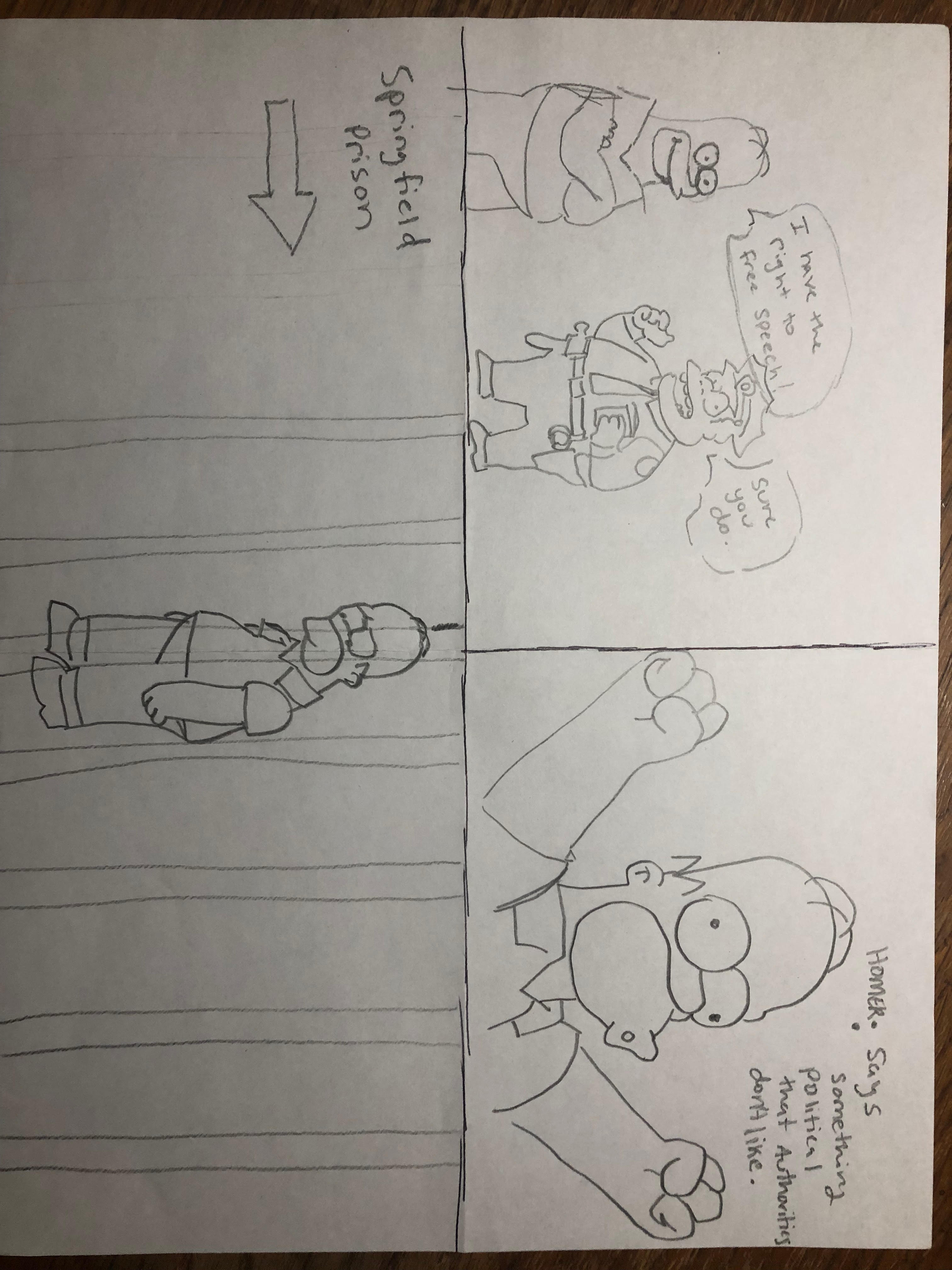
Freedom of speech can sometimes be a tough subject to understand. People use this human right to express opinions but while it is legal to do so, some individuals take advantage of the skepticism of the first amendment and exercise speech that is harmful, offensive, and unjust. The first amendment of the United States of America states “Congress shall make no law respecting an establishment of religion, or prohibiting the free exercise thereof; or abridging the freedom of speech, or of the press; or the right of the people peaceably to assemble, and to petition the Government for a redress of grievances.” Many groups of people claim to be robbed from their human rights by exercising their freedom of speech on authorial grounds such as public schools and public streets. These groups consists students, professors, and cultural groups. In articles, “The Berkeley Student Rebellion of 1964” by Mario Savio, “Free Speech On Campus? Not For Adjunct Faculty it Seems” by Kellie Bancalari and “The Campus Culture Wars” by Katy Steinmetz, are all explaining the importance of free speech and how certain groups were affected by it. It is important to know what speech is protected and what is not protected so we as human beings can live in a world of peace, freedom and liberty.
Liberty is essentially the power to do as one pleases. Having freedom of speech means we can say what we want when we want and where we want. Speech is a human right but the question that we struggle with as a civilized society is what filters need to be used when sharing ideas. Freedom of speech became a large controversial issue that we still struggle with today. In the defense of the human right, students from the University of berkeley formed the historic movement that changed society in a positive way. The movement was the free speech movement in 1964. What is the free speech movement and how did it start? The free speech movement was influenced by the civil rights movement and was initiated because the University of California Berkeley banned political activities on campus. Mario Savio was an important figure in the free speech movement. He was best known for his passionate speeches and his desire in helping others. Savio explains in detail the problems that were faced and tracks the progression of the famous rebellion in his piece “The Berkeley Student Rebellion of 1964.” Savio explains:
“There is less guilt to suffer in opposing the arbitrary power exercised over someone else than in opposing the equally unjust authority exercised over yourself. Thus, the order banning student politics on campus was an ideal locus of fierce protest. It combined an act of bureaucratic violence against the students themselves with open attack on student participation in the Bay Area civil rights movement. The seemingly inexhaustible energy which the Berkeley students had so long devoted to the struggle for Negro rights was now turned squarely on the vast, faceless University administration. This is what gave the Free Speech Movement its initial impetus.” (Savio)
I believe the Dean of the University of Berkeley was hoping the students wouldn’t react to his decision and was ultimately shocked by what he initiated. Having banned political activities on campus was a huge mistake that the Dean of the University of Berkeley had made. The rebellion involved thousands of students and remains today as a historic event that changed many people’s political views and values.
Just like students were being robbed from their freedom, adjunct professors can not share personal thoughts, views and opinions because of the unjust authorities. These individuals were afraid to take a stand on any issue because it would impact their daily lives. Sharing their thoughts can cost them their jobs. This is sad to hear because they were doing all the hard work but getting paid the scraps. Kellie Bancalari elaborates “Adjuncts are not full members of a university faculty — they’re instructors, occasionally visiting professors, often part-time or temporary. A key distinction when it comes to job security is that they don’t have the protections of tenure and are not even on a tenure track. Without tenure, it’s relatively easy for a university to dismiss you outright or choose not to rehire you.”(Bancalari) The fact that the don’t have job security and the authorities can easily dismiss them is a frightening statement. Adjunct professors felt the need to keep everything to themselves but many felt this was a violation to their human rights. Protests began and professors were fired. They were being robbed from their rights but also from their money. These professors barley had enough money to meet ends meet. In one extreme case, one adjunct professor couldn’t afford rent so she lived in her car.
So many groups were affected by this issue of freedom of speech but what is ironic is that freedom of speech can lead to great violence and hate for one another. Some people in this world are more than willing to say things to hurt an individual or culture just by simply disliking them. In the article “The Campus Wars” by Katy Steinmetz a culture was verbally attacked and the oppressor got away with it. Furthermore, Steinmetz argues “It’s a dizzying battleground: civil libertarians resist demands that even hateful speech be shut down as students protest controversial speakers and right-wing critics dismiss young liberals as delicate “snowflakes.” (Steinmetz 50). She says dazzling battleground because it is just that, a war we fight. To many of the Americans that were affected by racism, discrimination, and oppression, freedom of speech works against them. We are all aware that freedom of speech could be both used in a positive and negative way. The difficult task is where to draw the line in what speech should be allowed. The authors Mario Savio, Kellie bancalari and Katy Steinmetz take a stand for what they believe in and fight for what is right. Freedom of speech is a human right and shall never be taken from us due to the protection of the first amendment of the United States of America’s constitution. As we move further to improve our civil society, we must learn about the history of the free speech movement and not be afraid to speak your opinions as long as those opinions are not harmful towards others.
Works Cited
Savio, Mario. “The Berkeley Student Rebellion of 1964.” Www.fsm-A.org, 1965,
www.fsm-a.org/stacks/mario/savio_studrebel.htm
Steinmetz, Katy. THE CAMPUS CULTURE WARS. Time inc. 2017.pdf
Bancalari, Kellie. “Free Speech on Campus? Not for Adjunct Faculty, It Seems.” USA Today, 29
Aug.2017.

 Alex's Blog